Writer. Editor. Wordsmith.

Latest

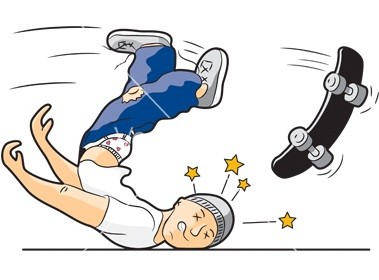
SPLAT!

So my first two weeks of 2012 have been less than stellar, but as they say, Rome wasn’t built in a day. Still, it’s hard to have all these ambitious goals, only to feel like a safe has been dropped on your head immediately after heading out on your merry little way to accomplish them. Am I aiming too high with my expectations?  Perhaps. But I need to feel excited about what I’m setting out to do, it keeps me motivated. My challenge I’ve discovered, is not my desire to attain my goals, it’s in my follow through.

So keeping all my hang-ups in mind, something struck me when I was reading an old article (don’t ask me why I still had such an old issue kicking around–clearly my reading pile needs to be gone through). In it, Horror writer, Lee Thomas, was joking that he has more daddy issues than an Atlantic City stripper, but if he went into them too deeply he could probably just diffuse them, which would end up being bad for his work, so instead he just accepts them for what they are. Maybe I’m getting too hung up on my own issues and should just let them be, rather than trying resolve them? Perhaps the obstacles I create are good for me?

Obstacles are what shape us into who we are becoming — every writer knows this. Without obstacles, there is no conflict and without conflict there is no story. So in order for the story to be good, there has to be safes dropping on our heads and cliffs that are too high and utter failure, because that’s how we learn how to do it better next time. I think my big problem is not the too high expectations, I think it’s my utter dislike of failure. I’d honestly rather not do it at all than risk failure, but then I end up fermenting in my frustrating lack of growth. See the vicious circle I love to trap myself in?
I think Henry Ford really knew what he was talking about, but too many of his quotes apply here, so I think I’ll sum up my failed week with my current favourite quote from an unlikley source: “Even if you fall on your face, you’re still moving forward.” And really, it’s not how you get to your goal, merely that you finally get to it in the end. Right?

New Beginnings

2011 was a tough year for me. Looking back on it from my rearview mirror as I speed away, I’m glad it’s over. What started off way back in optimistic January as a work day equally shared between time spent on my novel and time spent looking for gainful employment, slowly eroded into me juggling so many fill-in-the-gap-jobs that by October my two hours of morning writing on my novel were completely swallowed up by my game of survival — something had to give and I’m sad to say it was my own creative project, once again. Things got so busy in fact, I let my newest venture, this blog, lapse as well.

Admitting this both infuriates me and depresses me. A friend of mine, who I’ve always seen as very successful — hell, he even married his sexy boyfriend this past year — admitted that 2011 was a very tough year for him as well. He seemed to take his challenges in stride though, and dubbed 2011 not only his toughest year, but also the year that taught him the most about himself and through which he learned the most lessons. Well here it is, the end of the first week of the New Year and I’m still trying to figure out how the hell 2011 has benefited me.

The first image that popped into my head is that I feel like Heracles. Never once during 2011 did I succumbed to feeling like Sisyphus. In Greek mythology, Heracles was most famous for the Twelve “Impossible” Labours he was given to complete. Sisyphus, on the other hand was punished by the Gods for believing himself smarter than the immortals and forced to roll a huge boulder up a steep hill. Before he could reach the top, however, the massive stone would always roll back down, forcing him to begin again.

There are certainly days where I feel trapped in an eternity of useless efforts and unending frustration, especially when it comes to finishing and publishing my novel. I’ve been working on some draft form of it or another for over a decade. And yet, each time I’m pushed to the brink of giving up, I rally my strength — what Heracles was noted for — and press on despite the huge boulders rolling my way.

So, what has 2011 taught me? The most notable thing is how hard a worker I am. I’ve always chastised myself with thoughts of being lazy and unproductive, but after the sheer amount of job juggling I did last year, while still managing to meet all my deadlines and squeeze in some personal creativity, I will never buy into those negative thoughts again.

I know without a doubt, deep in my soul, that stories are my passion, my life blood, one of my true loves. I am inspired by the stories told by others, I collect them from everyone I listen to and I continue to strive to see my own shared with an audience of readers.

And finally, the hardest lesson I’ve learned, is how to ask for help from those close to me. Like Heracles I’ve always been determined to go it alone, confident in my personal strength, but even the great god of strength needed help in his Twelve Labours, whereas Sisyphus’ hubris rewarded him an eternity of fruitless work and everlasting defeat.

This early in the New Year, self-doubt still lingers and the scars from last year’s battles still ache, but I hold onto the lion’s share of my passion and continue to push forward.

Masks

I’m currently in the middle of working on our winter issue of PinkPlayMags. This issue’s theme is Burlesque and a really interesting sub-textual topic has come up in a number of the articles: The Masks We Wear.

My sister‘s instalment this issue in her column is called just that. As I was reading it through and editing, it struck a number of personal chords on insights I’ve been experiencing of late. (Sorry, no spoilers, you’ll have to wait until the issue comes out! I’ll do a follow-up post where I speak directly about her article. I know, such a tease, eh? But isn’t that was good burlesque is all about?)

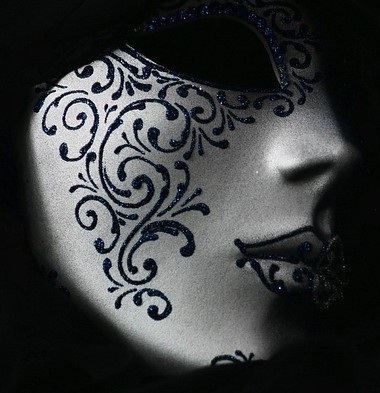
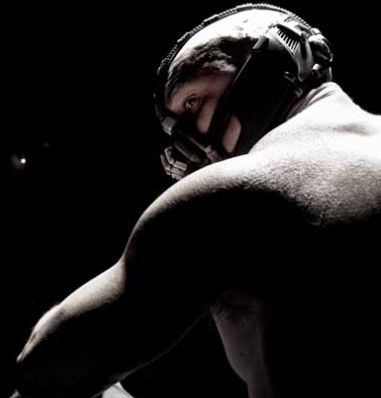
Doing a quick google for images on masks I was struck by something very intersesting: most of the images of women in masks were elegant, beautiful and mysterious in a seductive way; conversely, those of men in masks were all horrorific or of the lucha libre sort, with the odd super-hero thrown in for good measure. I took from these images that women seem to use their masks to tease and entice, whereas men use them as a warning or armour to protect themselves from prying eyes.

Well all this has me thinking. When you are writing characters, you are typically stripping away these masks so that your reader has a chance to see what really lies at the core of the people in your stories. However, they must remain in place amongst these same characters in order for them to maintain their relationships in said story. Tearing them off for all to see, often becomes a pivotal moment of character transformation, forever altering — sometimes outright destroying — their evolutionary path in the story.

Fantastic examples that spring to mind are:

Jean Grey‘s Phoenix persona: was it just her repressed passions, or her dark side made manifest?

The knights’ elaborate, mask-like helmets in the John Boorman film, Excalibur, showed the personae of the wearers.

In Twilight, Rosalie Cullen, though she acts cold to Bella at first, reveals that she actually envies Bella and is sad on the inside because of her inability to get pregnant.

Everyone of any importance on Babylon 5, as summed up by G’Kar’s word of warning to Catharine Sakai: “No one here is exactly what he appears. Not Mollarinot Delennnot Sinclair… and not me.I thoroughly enjoyed Babylon 5 because of the intricate masks all the characters wore — it was like they had one for every significant relationship in the series.

In Avatar The Last AirbenderPrince Zuko, is introduced as a ruthless, conceited bully who cares only about himself and looks down on everyone, when in reality, he’s just a kid who wants his father to be proud of him. His sister, Princess Azula, pretends to be a secure, strong, cold woman, but it’s revealed that she’s horribly lonely and desperate for her dead mother’s approval.

So like the masks themselves, this whole idea of hiding yourself while continually seeking to discover what’s behind the masks of others, ends up being an irresistibly delicious conflict and why they make for such compelling stories.

And yet, my personal struggle continues to be one where I long to strip off all my masks so I can just be accepted for who I am, but beyond the terror of exposing myself so completely, I think my greatest fear lies in the fact that I’m unsure who I am without them: am I merely the sum total of all my personal masks waiting to be collectively assimilated, or am I something beyond all that?

Makes for an intriguing story, doesn’t it?

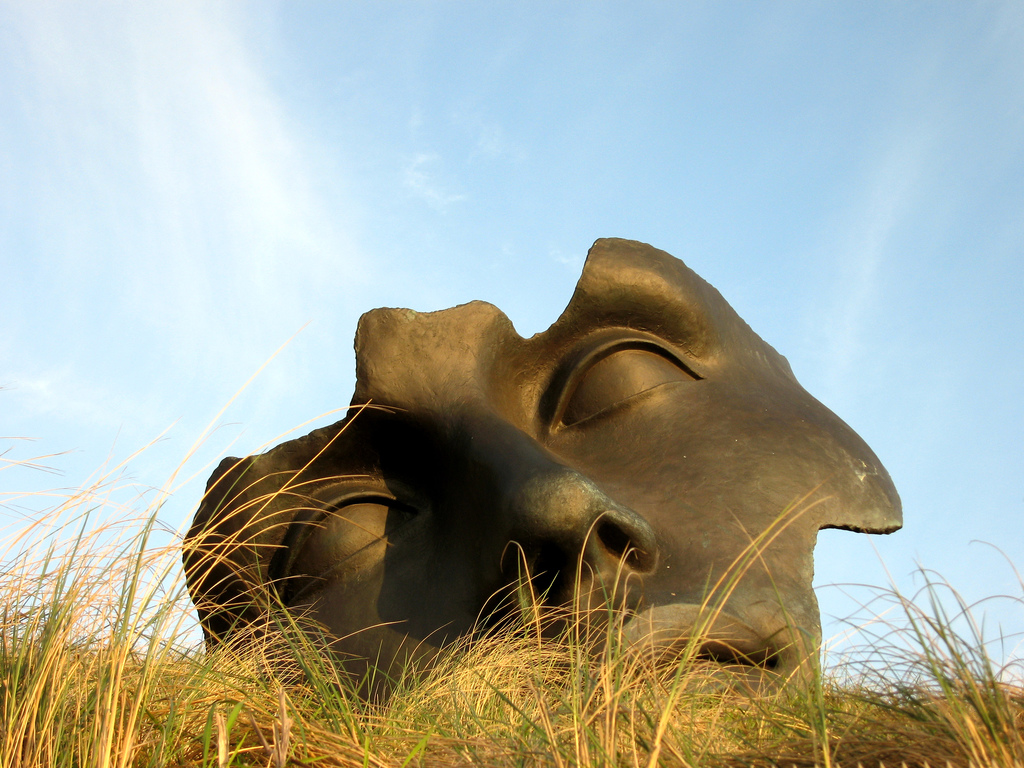
Broken Mask by Bas Hessels

Remembering

Without stories, how would we remember anything? Before stories were written down, every single culture in the world kept memory alive through oral tradition, telling stories around the fire at night. Two of the most vital and primal things in our lives have always been: the warmth of a fire and our need to tell the stories that matter to us.

Stories entertain, they make us laugh, sometimes cry, but most of all a good story teaches us something. Even if it’s a very simple tale, like a conversation between two people, we always walk away having learned something, at least about the person we’ve been talking to, if not about ourselves.

I remember hearing stories about the War from my Grandparents. Grandpa stayed home to work on the family farm, feeding the troops. Grandma was in the Women’s Land Army. It was a tough time, but I always recall how proudly they both spoke of their involvement. One of my favourite stories comes from that era.  You see, my Grandparents were brought together by the war. Grandma used to cycle past Home Farm, where my Grandfather grew up, every day to and from her job during the war. His eye, caught by the pretty young woman on the bike, Grandpa started waiting for her to pass as he worked in the fields. Romance sparked and the rest is our family story.

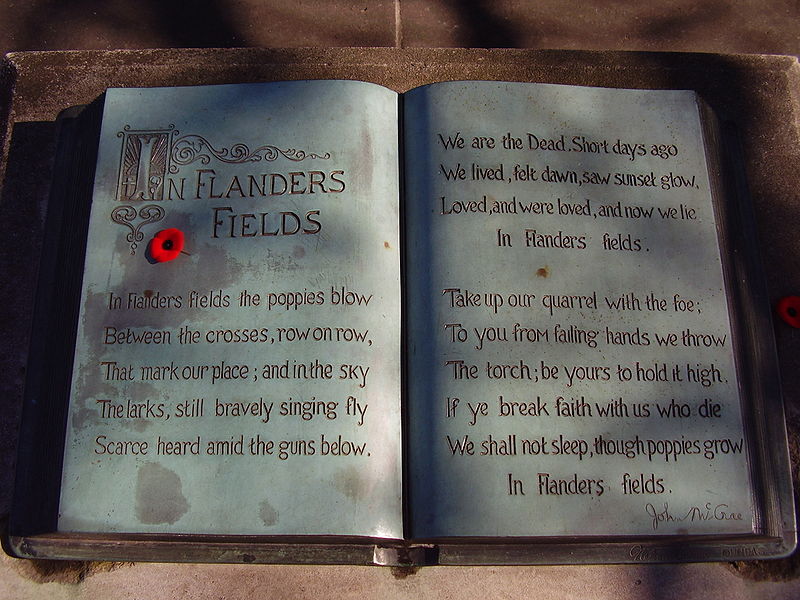
Both my grandparents survived the war, as did my father’s father, who was in the Navy. But many, many loved ones were lost so that we could enjoy the freedoms we now take for granted. So today’s story is their’s. One of bravery, courage in the face so much horror, pride and a fierce determination to provide a better world for their children to live in. If we pay attention to these important stories, then it’s less easy for us to get lost along the way and make the same mistakes that cause others to lay down their lives to protect us against the tragedy of war.

So today, I am remembering, lest we forget.

(I just learned that Lieutenant Colonel John McCrae, who wrote “In Flanders Fields” was from Guelph, which is where most of my relatives live. A local boy…)

A Good Read

So I had a wonderful time being loaned out as a book at the Toronto Ref Library on Saturday, as part of their Human Library.

My first borrower was an elderly lady by the name of Joan. Joan and I pass each other every Monday morning as I’m leaving my therapist’s office and she’s waiting outside for her turn. I have no idea what’s drawn me to her, but I always thought she was sweet and figured since we see each other once a week, every week for ages now, I should smile and say HI. She’s always complimented me on how warm my smile is and my heart always feels a little warmer as I thank her for reflecting my smile back at me. A great way to start a Monday, if you ask me. I’d been thinking of asking Joan for coffee or tea sometime, just to get to know her a little better, when she read my mind and asked me first, just last week. I immediately thought of suggesting she take me out on loan from the library, as it would be a wonderful opportunity for us to get to know each other. Turns out it was. It was an enjoyable first chapter for us both and we’ve decided to make a habit of spending an afternoon together in the future over a warm beverage, so we can trade stories.

I only had one other person take me out on loan, but both my sessions ran close to an hour — double the allotted time. Elaine and I had a deep conversation about telling our stories and fighting — and losing — the protracted battle for a happy ending in the wake of a tragedy. It was a tough conversation. I like to be able to help, especially if I am out of my depth and with no answers. I was able to walk away though, empowered by the support I was able to offer. Elaine is such a font of valuable and wise information — I hope she finds the strength to let her lost battle be the key to someone else’s win against the war on compassionate medical care for the elderly and disabled. It’s too easy for the doctors and hospitals to sweep aside patient understanding for dismissive “I know what I’m doing.”

While I was sitting on the “shelf” with the other books I had a wicked time chatting with my fellows up for being borrowed:

Lyndsay:  You are truly inspiring to have defied death at such a young age and with such a wonderful sense of humour about it all; I’m serious about being your ghost writer if you ever want to tell your story.

Beth:  Keep up the wonderful work — independent presses are what keep our reading experiences rich.

Andrea: It was so nice to grab some face time with you finally — thanks for the crash course in Twitter 101!

Vani: You were an über popular book and I’m disappointed we didn’t get more shelf time; I made the jump to Twitter, so look me up and we can share the experience as newbies.

Nick: Your bravery and ability to remain open-minded in the face of potential oppressors is awesome! Don’t ever let narrow minded fear or intimidation stand in your way of the good work you’re doing.

Shawn: Never got to flip pages with you, but I aspire to be as  plugged in to urban culture as you seem to be.

Catherine: It was great to connect over telling great stories, no matter the drudgery of transcription woes.

Chris: You are an unsung hero standing up for one of the city’s most undervalued infrastructures — without the TTC, where would Toronto be?

Donovan: Truly a pleasure to meet such an accomplished and easy-going writer, such as yourself; I look forward to running into you again.

Finally a HUGE thank you to Ab, Ken and most of all Anne Marie for organizing such a phenomenal event. I am so first in line for being on regular loan if you ever establish a permanent collection.  Just one of the reasons libraries are vital to cities and the people in them.

…I’m really looking forward to being a borrower next year.

Human Libary

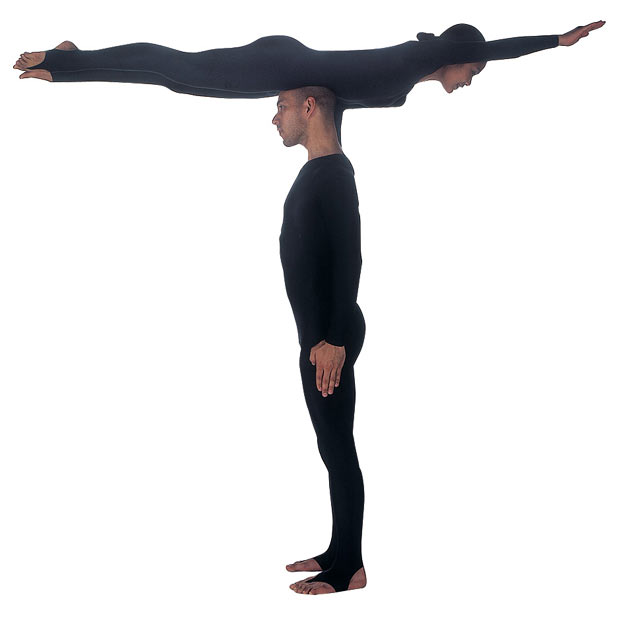
(The Pilobolus Human Alphabet photographed by John Kane)

omorrow I am going to be a Human Book!

I’m pretty excited about this. Last Saturday all the human books in Toronto had their orientation and I have to say, we’re a pretty interesting collection! What is a human book you may be asking yourself? Simply, a human book is a person with an unique story, often one that will give you insight into something you do not know about, or may have misconstrued preconceptions about, which the human book will gently break the myths around. It’s a learning experience and a one-on-one chance to have questions you may have always had answered, or to learn something new form someone cool. You can go and check out the full deal here, or read the article I wrote about it here in our most recent issue of autumnplay!

So, swing on by the branch closest to you (Downtown = Toronto Ref; North = North York; East = Cedarbrae; West = Richview) and take one of us out on loan for half-an-hour. Chat with us and walk away with a new experience, wiser for having connected and read.

I know we’re all very excited to see what interesting people will check us out!

Looking forward to meeting you.

Time

This post is in honour of Halloween, or All Hallow’s Eve, or Samhain. As all the kids, both young and old, scuttle about getting ready for ghoulish dress-up and trick-or-treating, I’m reminded of how my life has become rather chaotic of late. That’s saying something, as I’ve become rather good at multi-tasking my little heart out on a myriad of projects, while I seek to continue to pay the bills primarily with my writing, but endeavour at the same time to keep my own writing projects — namely my novel — from constantly being sidelined. I’m much better at time management than I used to be, but I will freely admit that it’s an ongoing struggle for me to consistently make the best use of the time allotted to me in a day. If I could forgo sleep, I would; however, I’m kinda beastly if I don’t get at least 7 hours of beauty rest.

My original goal with this site has been to post at least once a week. With that in mind I purposely saved Friday’s post for Saturday, so I could share how my orientation as a human book at the Toronto Public Library went. Well, my weekend ran away from me and now that post is being saved for this Friday. So, stay tuned for that.

But back to time and how fleeting it is. I find that all the clichés about time are horrendously true, especially these two: “time flies when you are having fun” and “the older you get the faster time goes by.” Why is that? If you read this fascinating article on it, then you know it has to do with the senses and how deeply they are invoked and thus how densely the memoires of these moments are recorded in our brains. We tend to remember our firsts: first kisses, first impressions of people, first trips to new places; and our lasts: graduations, final goodbyes, last kisses. We remember these moments vividly, almost in slow motion. They are what we write about in our stories because these are the most important times of our lives, or our characters’ lives, because they are so charged with sensory emotion. It’s these powerful place-holders in our minds that good stories are built around. Everything in between just tends to get lost in the stream of moment-to-moment. And yet, it’s so easy to get caught up in our daily routine that if feels like life just goes by us in a blur, save for these moments in time that mean something. It takes a certain skill to be able to hold onto those memorable moments as they happen, and to appreciate them and enjoy them before the daily roller-coaster of life WHOOSHES by us again.

So I suppose it’s no surprise that this holiday, as lost as it is amidst the commercialism and candy, is such an important time of year, because it’s all about time. The winding down of it, the dying off of the year from autumn into winter, and when you are faced with the end of time, you are frantic to grab hold of one last moment before it’s all gone. Moments like these are rich for reflection. One of the ancient rituals of the Celtic celebration of Samhain involves the cleansing of ritual fire. People would celebrate the year’s harvest with huge bonfires and into these conflagrations they would toss slips of paper, upon which were written things they’d been carrying with them all year. Things that they’d like to be rid of. Perhaps failed goals, or an old love that still haunted them, or worries about health, finances and family. Tossing these worries into the fire cleansed them and prepared them like the fields that now lay fallow, to be fresh and ready for new experiences to come the following spring.

So as the creatures of the night are out celebrating and gathering as many treats as they can fit into a pillowcase or plastic pumpkin, I’m going to light a candle, slow down time, and revel in the rich memories of this past year. Then I will cast off the failures of 2011 into the fire, so that I may ready myself for a winter of gestating the goals I want to realize in the spring of the coming year.

Happy Hallow’s Eve!

Characters

Every good story needs characters. Ones we can identify with, who often represent we the reader in some way. The story of our lives shape us into the characters we become. I was always a sensitive, daydreaming, pacifist kid: “I’m a writer and a dreamer, not a fighter.” Which, of course , made me the delightful target of every and any bully who ever scented my timid easy-going nature. School, for the most part was utter hell, especially high school, where I was marked out as the sole fag — a powerful word I soon came to understand the meaning of.

It breaks my heart to see the kids taking their lives these days to this same bullying that ground me down day-after-day. My parents were powerless to do anything about it, partly due to me not wanting to worsen my teen fate with a bail out from Mommy and Daddy, but mostly due to a completely broken school system running by Darwin’s Laws and not the Laws of Compassion, Understanding and Support for those who needed it most.

Take heart though, this is not a story about bullies. Although they make for great villains, that is a post for another day. I’ve been taking my power back from them for decades now. This is MY story and they are NOT my editor, so they cannot tell me how to write MY story — I do not give them that power. This is the story of characters, the tests, or quests, or obstacles set before our protagonists that build the stamina of character they need to go on to do great things.

I think one of the most powerful tools for building good characters, no matter how tragic they are destined to be, is to find the humour. A giggly girl by the name of Erica was one of a team of friends who saved my life and my sanity during the hell of small town high school. There were never tears because by god that would be letting the bullies win, but there was an abundance of laughter and that’s what got all of us through that very “educational” — in a character building way — time in our lives.

I just had a reunion with Erica and she is still her giggly self. It’s been 23 years since I last saw her, but that moment in time of her and I having one of our — to me — life saving laughs by the lockers upstairs is locked in the vault of my memory. And you know, seeing her made me realize that while it still sometimes feels like the horrible moments outnumbered the good moments, the good moments were much more powerful. If you’ve ever seen a sword forged, it gets subjected to white-hot furnace heat again and again, then pounded into shape by a hammer, but it’s the cool water bath after that tempers the forging. Water has always represented the emotions, and laughter (alongside love) is the most powerful of emotions. I have been tempered by a lot of good people over the years, responsible in the forging of my character. I’ve been very lucky in that respect.

I’ve always been fond of saying, “I need to see my hero bleed, before I can really care about him.” But I want to add to that statement: “I need to experience his sense of humour, to know he’s capable of surviving the shit being thrown at him.” I believe good characters make a story important — memorable — to me, and to many people. And the forging of them draw us in and keep us coming back for more.

Guilty!

I have a very bad habit of over-editing my work. My Inner Editor is constantly getting in the way of my creative muse and often very difficult to shut off. That is the main reason it’s taken me so long to get this website live.

I originally had the intention of keeping the site simple, but the moment I discovered the theme for my blog posts — The Power of Stories — I suddenly realized I had more to say than I thought. My whole life is influenced by stories and how they are told, the power they have over our imaginations and the way they influence every moment of our lives.

But, being the perfectionist my Inner Editor is, I’ve gone over and over and over my prior posts, originally determined to ensure there are no embarrassing typos, but instead getting distracted on updating and expanding on the ideas in my posts, re-writing them to be more clever, more meaningful, more succinct. Well, I had to put my foot down and make it stop. Over the last week I’ve told several people to expect the launch of my new website. They were at first patient, but then a few stopped tapping their foot politely and asked me, “What the fuck? Are you doing it or not?!”

Yes, I am. One more week, I promise. And this time I mean it. No more over-editing, although I think I’m going to have a hard time not going back to at least tweak a few things–all in the guise of checking for typos.


Grammar

Language is a powerful thing. Take for instance the diminutive apostrophe. Used incorrectly it can turn a business that knows its shit, into a business that knows it’s shit. Such a confidence crusher that one little mistake, and one that spell check will never save you from.

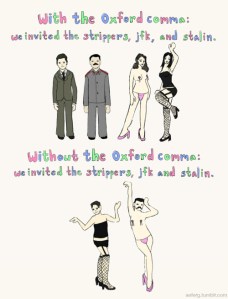
This week I stumbled across a grand debate, which has been ongoing for a while now, about the Oxford Comma. Also called a Serial or Harvard Comma, it is the optional comma used before the final “and” when writing lists. I’ve never been a big fan of using it. I’ve no idea why I’ve never been a big fan, I guess it just seemed superfluous, cluttered up the sentence, added in an extra pause that could better be used elsewhere. As a proud Canadian I use the British rule when questions of grammar come up (although I have been known to cheat on occasion).

Then, after seeing this cartoon, it got me thinking.

While I consider myself a careful writer, I do have a bad habit of leaving part of my edited storytelling inside my head, so what is obvious to me, may not always be so obvious to my readers, especially those I don’t know and who don’t know me very well. And while I would get a real kick out someone adding a whole new level to my story because of something as minor as a comma that I’ve chosen not to use, I guess the question really becomes a matter of whether I should add that little something extra in, so that the true meaning of my story can be preserved.

Personally, if I’d wanted JFK and Stalin to be strippers I’d have emphasized the titillating fact by using a colon in place of the comma, thusly:

We invited the strippers: JFK and Stalin.

I think it’s more punchy that way, but then I suppose that’s a different grammatical debate for another day.